| FEES: | 7v7 - $675,
9v9 - $800, |
| APPLICATION DEADLINE: | June 30, 2026 |
| CREDIT CARD PAYMENT |
Age Brackets:
Under 9-Born between 8/1/17 – 7/31/18
Under 10-Born between 8/1/16 – 7/31/17
Under 11-Born between 8/1/15 – 7/31/16
Under 12-Born between 8/1/14 – 7/31/15
A roster must be on file with tournament headquarters prior to competition and it must be a team roster for the Fall of 2026.
Tournament Director: Kelly Gray
Email: wolvescup1974@gmail.com
ELIGIBILITY: All state associations, foreign teams-Canadian teams as well as all US Soccer affiliated teams are eligible to participate in the Wolves Cup.
REGISTRATION- THERE WILL BE NO REGISTRATION OUT AT THE FIELDS.
Registration materials must be submitted online. All teams must be in possession of the following items at all tournament games for all players, including guest players:
- Current 2026/27 pass cards
- Official Roster
- Signed medical release forms
- Guest Player Roster and pass card(if applicable)
- Valid Risk Management Cards (Non-MSYSA Teams need to bring your organization s equivalent) for coaches and managers
AGE BRACKETS:
Under 9-Born between 8/1/17 – 7/31/18
Under 10-Born between 8/1/16 – 7/31/17
Under 11-Born between 8/1/15 – 7/31/16
Under 12-Born between 8/1/14 – 7/31/15
The maximum roster size per age group is as follows:
7v7-12 players maximum (U8 playing up, U9 and U10)
9v9 -14 players maximum (U10 playing up, U11 and U12)
A player can now be rostered on multiple teams but can only play with their age group or play up. A player cannot play down an age.
Boys are NOT allowed to play on girls’ team in a Girls division even if they have a valid pass card.
A maximum of 5 guest players (from outside a team’s club) are allowed per team at MSYSA sanctioned tournaments. Additionally, an unlimited number of club pass card players are allowed per team provided that at least 50% of the players appearing on a tournament roster also appear on a team s league roster. Club means an organization providing soccer to youth players that is either a direct member of MSYSA or that registers players with MSYSA through an affiliated member. At no time shall an affiliated member who functions as a scheduling league also be considered a club. In the case where a club sets up one or more satellite clubs in the state, those satellite clubs may only be considered part of the main club for the purposes of the Wolves Cup if all the following criteria are met: 1. The main club and satellite club have the same Board of Directors 2. The main club and satellite club have the same Tax ID number 3. The main club and satellite club are in the same MSYSA District as determined by the MSYSA Board of Directors.
RISK MANAGEMENT: The Michigan Wolves adhere to the Michigan State Youth Soccer Association Risk Management policies: These can be found on the MSYSA website. MSYSA registered teams will be required to present risk management cards for coaches, assistant coaches and team managers. Non-MSYSA team need to bring their organizations equivalent to the MSYSA risk management card
CONCUSSION POLICY:
MSYSA coaches must be able to provide their CDC Heads Up Concussion Certification. All non MSYSA coaches must be able to provide the CDC Heads-up Concussion certificate or the NFHS Concussion in Sports certificate. Teams must be able to provide the Michigan Department of Community Health/CDC Parent and Athlete Concussion Information Sheet for each player attending the tournament. Concussion certificates should be no more than 3 years old. If so, you must renew.
SAFESPORT:
All Adult members must obtain RM clearance and complete the Core SafeSport Training by the earlier of 1) prior to regular contact with a Minor Participant; or 2) within the first 45 days of the Covered Adult taking on the role giving them access to Minor Participants. The SafeSport Trained requirement is considered valid for one year and a SafeSport Refresher course is available on the Safesport.org website in order for Covered Adults to maintain their SafeSport Certification.
Length of Game:
(7v7) 2 x 25-minute halves; 5-minute half time
(9 v 9) 2 x 30 minutes halves; 5-minute half time
Note: Games may be shortened to maintain the integrity of the schedule. There is no overtime for any games resulting in a tie.
FIFA RULES APPLY, UNLESS LISTED DIFFERENTLY IN TOURNAMENT RULES.
Player Equipment
1. Shin guards are mandatory and must be covered by socks.
2. Shirt/jerseys will be tucked into players shorts at all times.
3. Hard cast and soft cast will be allowed upon approval of referee and/or tournament Committee.
4. Home teams will wear light colored jerseys (i.e., White, beige, etc.) and away teams will wear dark colored jerseys (i.e., black, navy blue, etc.)
5. All uniforms must have numbers; there should be no DUPLICATE numbers on the field. If there are duplicate numbers then those players should have proper credentials to play on the team, such as being on roster or being properly registered as a guest player with the tournament. Issues in regard to number disputes should be brought to the attention of the tournament committee prior to the start of the game. Any disputes over a team that has players with duplicate numbers will be resolved by the tournament committee.
A team that fails to field 5 for 7v7 games and 6 for 9v9 games, 5 minutes after the scheduled kick off, will forfeit. The score will be 4-0. Any use of illegal players will result in a forfeiture of all games.
Game Ball
Game balls will be provided by the tournament at each field.
Substitutions:
Substitutions may be made with referee’s approval only. The number of substitutions is unlimited. A player may be substituted on a stoppage of play with the permission of the referee (NOTE: Tournament regulations may limit when substitutions may be made by specifying specific stoppages in play when substitutions can be made (ex: at goal kicks and corner kicks, on your team’s throw-ins, when a player is cautioned).
7V7 Provisions:
Offside - The build out line will also be used to denote where offside offenses can be called. Players cannot be penalized for an offside offense between the two build out lines on the field. Players can be penalized for an offside offense between the build out line and goal line.
Placement of the Build out Line - The build out line shall be placed equal distant between the top of the penalty line (not the top of the arc that is attached to penalty line) and the halfway line of the field.
Build Out Line The build out line promotes playing the ball out of the back in a less pressured setting. When the goalkeeper has the ball in hand in the run of play (from opponent) or from a goal kick, the opposing team must move behind the build out line. The retreated team can resume normal play once the ball crosses the penalty area line.
Free Kicks - Both Direct and Indirect kicks per FIFA Laws of the game.
Goal Kick - Restarts are started with the ball on the ground placed inside the 6-yard box. (No more GK picking up the ball and restarting with ball in hand).
No punting or drop kicks from goalie
Elimination of Heading Policy:
a. All players aged 10 and younger, regardless of what age group they play in, may not head the ball.
b. All players in the U11 age group or younger may not head the ball.
c. A header by these players shall result in an indirect free kick awarded to the opponent at the spot of the infraction. If the header occurs within the goal area, the indirect free kick shall be taken on the goal area line parallel to the goal line at the point nearest to where the infringement occurred.
d. If a player intentionally heads the ball, but the referee deems that it is not purposeful, then play shall continue.
Indoor Facilities:
All balls that come in contact with the ceiling, roof, structure, etc. shall be restarted at the closest point of contact as a throw in for the opposing team.
Notice of Amendments:
The tournament rules are subject to change with or without notice.
Referee Assignor and Ref Insight
a. Out-of-Area referees must show photo identification to verify identity.
b. The tournament utilizes a referee assignor that is currently certified by US Soccer Federation.
c. All referee assigning will be done through the Ref Insight system.
Spectators and Teams
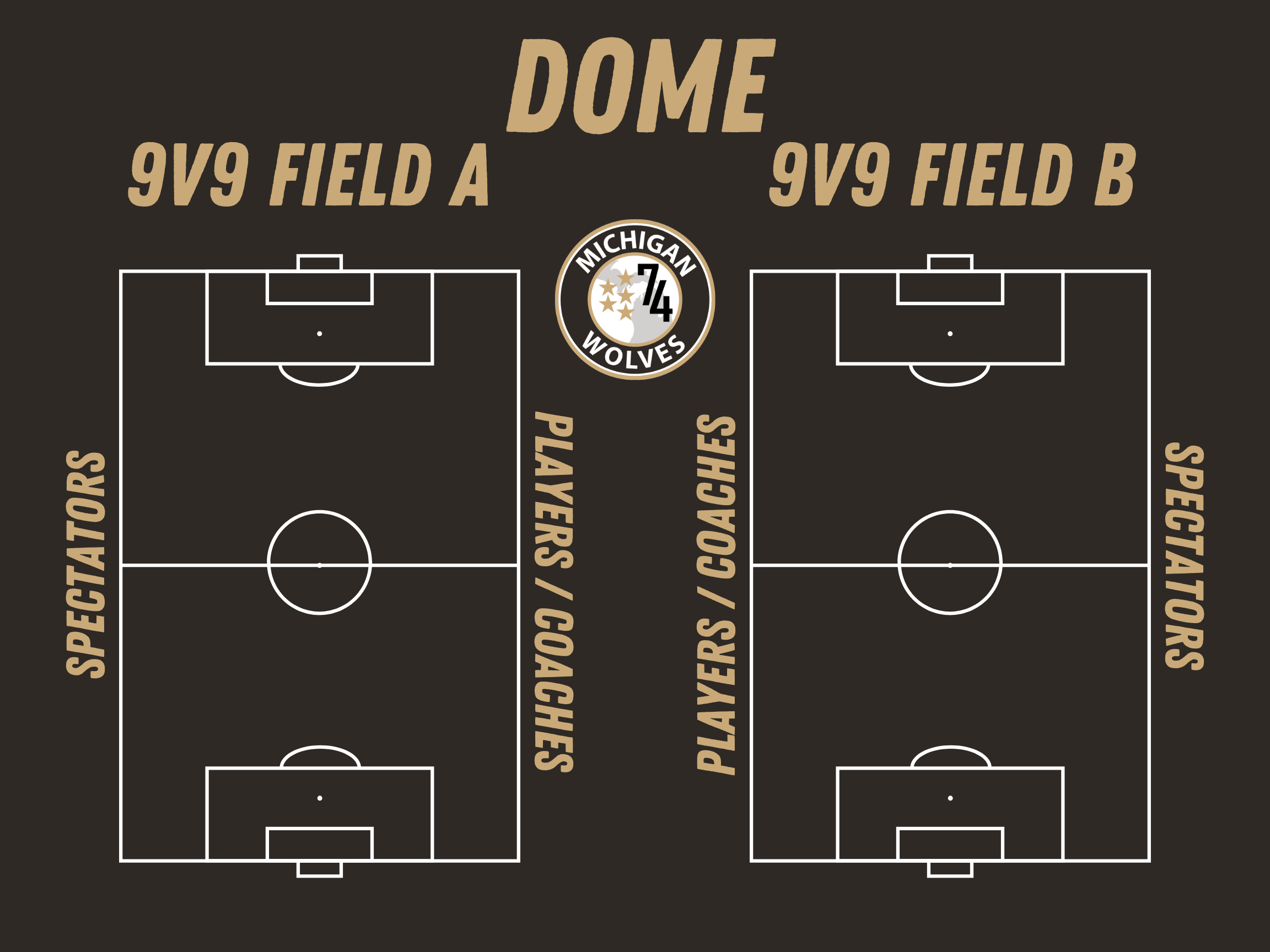
a. Teams will have their bench on the same side. Spectators will be on the opposite side. The halfway line will divide the teams and the spectators.
b. Coaches are RESPONSIBLE for the spectators that accompany his or her team. Dissent will not be tolerated.
c. No artificial noisemakers of any kind are permitted. The Tournament Director has the final decision in case of any discrepancies.
d. If it becomes evident that the spectators become unruly and cannot be controlled, the field sidelines will be cleared of all spectators. If spectators refuse to leave the field of play, the game will be suspended and perhaps forfeited upon an investigation by the Tournament Director.
e. If it is feasible to replay the game that was cancelled because of spectator behavior, no spectators will be permitted at the game site of the replayed game.
f. Coach and/ or team may be assessed a $200 fine as a result of unacceptable spectator behavior or referee abuse.
g. Veo cameras or like must be secured to the ground when set up.
Unmanded Aircraft Systems (Drones)
The use of non-approved unmanned aircraft systems (drones) is strictly prohibited at any/all tournament games. The systems may be approved by the tournament for a specified promotional activity given that the request is submitted in writing to the tournament in advance. Any person in violation of this policy shall be immediately removed from the field, facility and/or event.
Coaching from the Sidelines
a. A coach may coach his/her own team from the sidelines, provided that mechanical devices are not used, tone of voice is informative and not a harangue, and he/she stays within his/her technical area during the game.
b. Mechanical Devices (above) includes but is not limited to cell phones as well as other devices as determined by the Tournament Director.
c. Failure to abide by the aforementioned criteria in coaching from the sidelines may result in sanctioned by the Tournament Director such as game suspensions, game forfeitures, and fees.
Alcohol and Illegal Drugs
Players and coaches are prohibited from consuming alcohol or using illegal drugs during competition. Players and coaches are also prohibited from using any form of tobacco at the playing site of the tournament. The penalty for violation by player and/or coach may be disqualification from the tournament.
Spirit of the Game
g. If the Tournament Director determines that a particular action by a team or any of its members or spectators is deemed unacceptable for any reason, the team may be disqualified, sanctioned, and/or face forfeiture of one or more games.
h. In the event that any team is suspected of forfeiting a game with the design or purpose of controlling the advancement of any team from its own bracket or any other bracket, the Tournament Director may require such an advancing team to play another qualifying game against the next highest-ranking team that would otherwise be eligible to advance.
Disputes Any disagreement which cannot be resolved by the listed rules will be settled by the Tournament Committee.
Score disputes: In situations where there is a disagreement about the score between teams/coaches/managers etc., the tournament committee will determine outcome by referring to the original signed game card from the game. Please make sure that the score is correct prior to signing the game sheet
Referee Decisions are Final. No disputes. No appeals. Final Rulings-The final interpreter of the foregoing rules and regulations and any matters not provided for in these rules will be the Tournament Committee, whose decisions shall be final.
There shall be no dissent between players and/or coaches and the referee. Questioning a referee is considered dissent. All coaches are responsible for the actions of their spectators, specifically verbal abuse of referees. Such abuse will not be tolerated by the tournament, and any decisions will be made by the tournament committee.
Misapplication of the Laws of the Game may be a valid basis for a protest. Thus, a referee’s judgement shall not be a basis for protests. Any protest must be presented in writing to the Tournament Director with one hour of the completion of the game in protest. All protests must be accompanied with a $150 bond. If protest is upheld, the bond will be returned. Any protest against any team that has already been eliminated will not be entertained.
Ejections: Any player, coach, assistant coach or manager receiving a red card will not be permitted to participate in the remainder of the game and the following game. The player/coach pass card is to be turned into the site headquarters immediately following the initial suspension game. Suspension from additional games will be contingent upon a review of the violation after receipt of the referee report. Tournament will submit a red/yellow card to the state/league and state association at the conclusion of the event and disciplinary actions may be determined by each league and/or state association. A 2nd red card results in suspension from the remainder of the tournament.
All Schoolcraft Campus rules must be obeyed while on premises.
VIOLATORS WILL BE ASKED TO LEAVE.
Post Game Reporting:
Do not add substitution times for the temporary sub unless he/she is added as a permanent sub
Record any goals or misconducts for the temporary substitute on the match report
Any suspected head injuries need to be followed up with an incident report, regardless of whether or not the player returned to play
In the incident report, please describe who entered as a temporary sub and the minutes played
Division Standings Win = 3 pts. Tie = 1 pt. Loss = 0 pt.
Divisions of 4 Teams
A round robin competition will be held. Upon conclusion of the round robin play, all teams will be ranked as to their performance over the 3 games. Champion and Finalist awards will be made to the teams with the highest two-point totals. Ties will be broken according to Tie Breaker Rules.
TIE BREAKER
1. Head-to-Head (skip if more than two teams are tied)
a. If three-way tie, then head-to-head is thrown out completely
2. Goal Differential- Goals scored minus goals allowed (max. 4 per game)
3. Least goals against
4. Most goals scored (max. 4 per game)
a. if still tied: A coin will be flipped by all 3 teams. After two teams get the same coin markings (both heads or both tails) the 3rd team that gets opposite of the other two teams will sit out while the other two teams take penalty kicks first. The team that wins that round of penalty kicks will then do penalty kicks against the team that sat out in the first round. This will then determine the 1st place team and the team that lost in the second round of penalty kicks will be runners up.
5. Penalty kicks. 5 per team, alternating. If tied after 5 each, 1 per team will be selected until the tie is broken. (The penalty shooters can be anyone who is dressed to play and rostered, only applies to tie breakers).
Awards - team trophies and individual medals will be awarded to 1st and 2nd place teams in all age groups.
Inclement Weather: The tournament committee and/or director have the right to stop games due to weather. The tournament will follow US Soccer’s position statement that indicates when lightning is seen, the tournament will count the time until thunder is heard. If this time is thirty seconds or less, seek shelter. Wait thirty minutes or more after hearing the last thunder before resuming activities.
Games interrupted in the first half:
a. will continue if time permits
b. If time does not permit, a 0-0 tie will be awarded.
Games interrupted after the completion of the first half:
1. will continue if time permits
2. If time does not permit, the score of the game will stand. If weather does not permit the final game from being played and there are no other options to move game to a playable location that is agreed upon by both teams, then Co-champions will be awarded.
Refund Policy:
WEATHER RELATED REFUND POLICY DUE TO CIRCUMSTANCES OR CONDITION BEYOND OUR CONTROL, THE TOURNAMENT COMMITTEE WILL NOT BE RESPONSIBLE FOR ANY REFUNDS UNDER ANY CIRCUMSTANCES. ANY TEAMS THAT WITHDRAW BEFORE ARE ELIGIBLE TO RECEIVE A FULL REFUND. REFUNDS WILL NOT BE GIVEN TO TEAMS THAT WITHDRAW AFTER THE DEADLINE.
Athletic Trainers/Health Care Professionals (HCP)
An adequate number of Health Care Professionals (HCP) will be present for the tournament if the tournament has 64 or more teams at U11 and older age groups. Health Care Professionals are considered an Athletic Trainer Certified (ATC) or Physician (MD/DO), with skills in emergency care, sports medicine injuries and experience related to concussion evaluation and management.
Suspected Head Injury Substitution Protocol
Situations where a Health Care Professional (HCP) is Present:
Any player who sustains a significant blow to the head or body, who complains about or is exhibiting symptoms consistent with having suffered a concussion or is otherwise suspected of having sustained a concussion, must be evaluated on the sideline by an on-site HCP. This professional will perform applicable testing-SCAT3 or Child SCAT3 and modified BESS to evaluate players on the field/sideline. Any player suspected of suffering a concussion will not be allowed to return to play until he/she is cleared by the Health Care Professional. Coaches, parents/guardians or players may not overrule the Health Care Professional. If a coach seeks to allow a player to re-enter the game who had been removed from a game for a concussion assessment and who has not been cleared to return to play by the on-site HCP, the referee shall issue a warning to the coach. If a coach persists in seeking to allow such player to re-enter the game after having been issued a warning, the referee is entitled to take other disciplinary measures against the coach as are permitted.
Situations where no Health Care Professional (HCP) is Present:
If a player who sustains a significant blow to the head or body, who complains about or is exhibiting symptoms consistent with having suffered a concussion or is otherwise suspected of having sustained a concussion, must be evaluated by an HCP before the player will be allowed to return to practice or play. No coach shall permit a player who has been removed from a game for a concussion assessment to return to play until cleared to do so by an HCP. If a coach seeks to allow a player who had been removed from a game for a concussion assessment to re-enter the game, the referee shall allow the player to return to the field but shall immediately stop play, direct the player to leave the field of play and direct the coach to remove the player and select a substitute. If a coach seeks to allow a player to re-enter who had been removed from a game for a concussion assessment, the referee shall issue a warning to the coach. If a coach persists in seeking to allow a player to re-enter the game after having been issued a warning, the referee is entitled to take such other disciplinary measures as are permitted. Unless an HCP determines that the player has not suffered a concussion, and cleared the player to return to play, the player will not be permitted to return to practice or play until the player has successfully completed the return to play protocol and has been cleared to return to play by a Physician.
The Tournament substitution protocol has been amended to allow a temporary substitution to replace the injured player while the player is being evaluated. This amendment is only applicable for head injuries; all other injuries must follow the standard substitution protocol as outlined in the respective rules of competition your team is participating with at that time.
A team may only make a temporary substitution if they have at least one substitution remaining. In the event there are multiple players being evaluated with head injuries from the same team at the same time, that team cannot make more temporary substitutions than the number of substitutions that team has remaining. For example, if two players from the same team receive head injuries at the same time, that team needs two available substitutions, (injured players that are cleared can re-enter at separate stoppages.)
The temporary substitution will not count against the team s total number of allowed substitutions. If the player being evaluated has received clearance from the HCP to return to the game, that player may re-enter at any stoppage of play and must replace the original temporary substitute, who will remain an available substitute and will be permitted to re-enter the game. Any cautions assessed to that player while in the game as a temporary substitute will carry with the player for the remainder of the game. In the event that player receives a red card while in the game as a temporary substitute, the player must exit the game and the team must play down a player. Following the send-off, if the player being evaluated for a head injury is cleared to return, the player may re-enter the game but the team will have to utilize a substitution. If the game ends before the evaluated player is cleared to return, the temporary substitute must be marked on the game report as a standard substitute.
If the player being evaluated for a head injury is not cleared to return, the temporary substitute will remain in the game and the team will be assessed for a substitution.
Possible Scenarios
If there is only one substitution remaining and a temporary substitute enters the game, can the teams make any other substitutions while the injured player is being evaluated:
No
A temporary substitute receives a head injury while in the game:
If a temporary substitute receives a head injury while in the game as a temporary substitute, that player may be replaced by an additional temporary substitute, but only if that team has a second substitution remaining
If there is not a second substitution remaining, the team must play down a player until either the original player or the temporary substitution being evaluated have been cleared to return
If a second temporary substitute is utilized and both the original player and the first temporary substitute are not cleared to continue, the second temporary sub can remain in the game and that team will only need to use one substitution
Two players on the same team receive head injuries at the same time:
To replace both players with temporary substitute, the team must have two substitutions
What if the player being evaluated receives a red card?
The temporary substitute must come off the field
The team plays down a player
The temporary substitute that was in the game for that player returns to the technical area and is available throughout the rest of the game as a regular substitute
A substitution is not utilized
What if the temporary substitute receives a red card?
The temporary substitute must leave the field of play
The team must play down a player the rest of the game
If the player being evaluated is clear to return to the game, he/she may come back in the game in place of another player, but the team will have to utilize one substitution.
A goalkeeper receives a head injury:
A head injury to a goalkeeper is treated exactly the same as any other head injury. There are no special circumstances for this situation.
Does a neck injury count as a head injury?
No, neck injuries are not considered head injuries.